



The cricket may be months away, but the IPL 2027 season is already being shaped in boardrooms and negotiation calls. With the pre-season trade window open and a mini-auction expected in December 2026, franchises are busy patching squad gaps, offloading underperformers and positioning themselves for another tilt at the title. Royal Challengers Bengaluru may be the reigning back-to-back champions, but the rest of the field is moving fast to close the gap.
Here is your complete guide to the IPL 2027 trades, the mini-auction, and the rules that govern how teams build their squads.
How the IPL 2027 player market works
Before the mini-auction, franchises can reshape their rosters through the trade window. Trades come in two forms: a straight swap of players between two teams, or a cash deal where one franchise pays a fee to acquire a player. It is often a quicker, more targeted way to fix a squad than waiting for the auction table, where bidding wars can spiral.
The trade route has produced some of the most dramatic moves in IPL history. Hardik Pandya’s switch from Gujarat Titans to Mumbai Indians remains the benchmark for how big these deals can get, and names like Robin Uthappa and Cameron Green have also changed colours via trades rather than the auction. The window typically stays open until about a week before the auction, giving teams time to sort out their priorities.
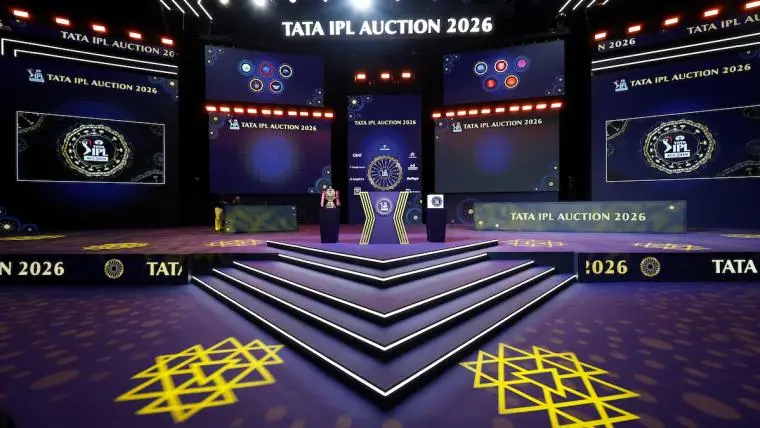
The mini-auction for IPL 2027 is expected to be held in the third week of December 2026. Unlike a mega auction, where squads are largely torn up and rebuilt, a mini-auction is about topping up — filling specific holes with the players available in the pool. That makes the pre-auction trades all the more important, because franchises want to walk into the auction with a clear plan and only a handful of slots to fill.
The blockbuster trade: Rishabh Pant returns to Delhi
The defining move of the IPL 2027 window so far is a headline swap between Delhi Capitals and Lucknow Super Giants. Rishabh Pant is heading back to Delhi Capitals, the franchise where he built his reputation, while left-arm wrist-spinner Kuldeep Yadav moves in the opposite direction to Lucknow.
The numbers tell the story of just how significant this is. Pant became the most expensive buy in IPL history when Lucknow signed him for INR 27 crore at the 2025 mega auction. He returns to Delhi at a reworked fee of INR 15 crore — a sharp pay cut that reflects two difficult seasons in Lucknow colours. Kuldeep, meanwhile, joins LSG at his existing price of around INR 13.5 crore.
For Pant, this is a homecoming. He spent nine seasons with Delhi between 2016 and 2024, featuring in 111 matches — more than any other player in the franchise’s history — and captaining the side in 43 games across four seasons. His two-year spell at Lucknow, by contrast, was a struggle both with the bat and as captain. LSG finished at the bottom of the table in 2026, and Pant stepped down from the leadership before the season was even over, having managed 10 wins against 18 defeats in charge.
Kuldeep’s move is a fresh start too. He was a consistent wicket-taker for Delhi, claiming 72 wickets in 65 matches at a strong economy since joining in 2022, though 2026 proved a tougher, more expensive campaign for the spinner. Playing for the franchise that represents his home state of Uttar Pradesh adds a neat subplot to the switch.
There is also a purse dimension. Because the two salaries do not match, the swap shifts auction budget between the clubs — Lucknow gains roughly INR 13.75 crore in extra room, while Delhi loses a little over INR 1 crore to fund Pant’s revised deal. In a market where every crore counts, that reshuffle matters heading into the auction.
A shift in the Delhi boardroom
The Pant trade also lands against the backdrop of change at Delhi Capitals off the field. Control of the franchise is moving to the Parth Jindal-led JSW group for the next two seasons, after a spell in which the GMR Group led decision-making. Delhi failed to reach the playoffs in both 2025 and 2026, so the reunion with Pant reads as a statement of intent from a franchise looking to reset and rebuild around a familiar, marquee face.
Who else could be on the move?
The Pant-Kuldeep deal may only be the beginning. Speculation has swirled around several senior names, with reports linking multiple franchises to possible trades for established players. Big-name movement tends to snowball once the first domino falls, and teams that missed the playoffs will be especially motivated to make bold changes.
It is worth remembering that pay cuts as part of trades are becoming a familiar feature of this market. Ahead of IPL 2026, another senior India all-rounder took a reduced fee as part of a high-profile switch, showing that even the biggest stars are willing to renegotiate to land at the right franchise. Expect more of the same before the December auction.
The money and the rules for IPL 2027
Under the current 2025–27 player regulations, the financial framework for IPL 2027 is set:
- Salary cap: INR 157 crore per franchise for 2027, up from INR 151 crore in 2026 and INR 146 crore in 2025. The total cap combines the auction purse, incremental performance pay and match fees.
- Auction purse: the base auction purse for franchises sits at INR 120 crore under this cycle.
- Match fees: introduced for the first time in the previous cycle, each playing member — including the designated Impact Player — earns a per-match fee on top of their contracted salary. Over a full season, that adds up to a meaningful bonus for regulars.
- Impact Player rule: the tactical substitution rule remains in force through the 2027 season, continuing to add strategic depth to team selection.
These rules are designed to reward performance and keep the competition balanced, making it more expensive to simply hoard a squad and nudging teams toward smart trades and shrewd auction buys.
What the trades tell us about IPL 2027
Read together, the early moves point to a few clear themes for the season ahead:
- Rebuilds are real. Franchises that struggled in 2026 are not standing still — they are trading aggressively and freeing up purse space to reshape their cores.
- Home-state and homecoming narratives matter. Both halves of the marquee swap carry a personal storyline, and those threads add to the drama fans love.
- Value is being reset. Marquee players taking pay cuts signals a more pragmatic market, where fit and role can matter as much as headline price.
- The auction will be tactical. With a mini-auction rather than a mega reset, teams enter December with targeted needs, so smart planning will separate the well-run franchises from the rest.
The bottom line
The IPL 2027 trade window has already delivered a genuine blockbuster in Rishabh Pant’s return to Delhi Capitals and Kuldeep Yadav’s move to Lucknow, and the December mini-auction promises more intrigue. With the salary cap rising to INR 157 crore, match fees rewarding regulars, and the Impact Player rule still in play, every franchise is recalculating how to build a winner. The champions may wear RCB colours right now, but the off-season is where the chase for IPL 2027 truly begins — and the moves being made today will decide who lifts the trophy next summer.
Note: Trade fees, purse figures and auction timelines are based on current reporting and official IPL statements, and remain subject to BCCI ratification and further updates.


