



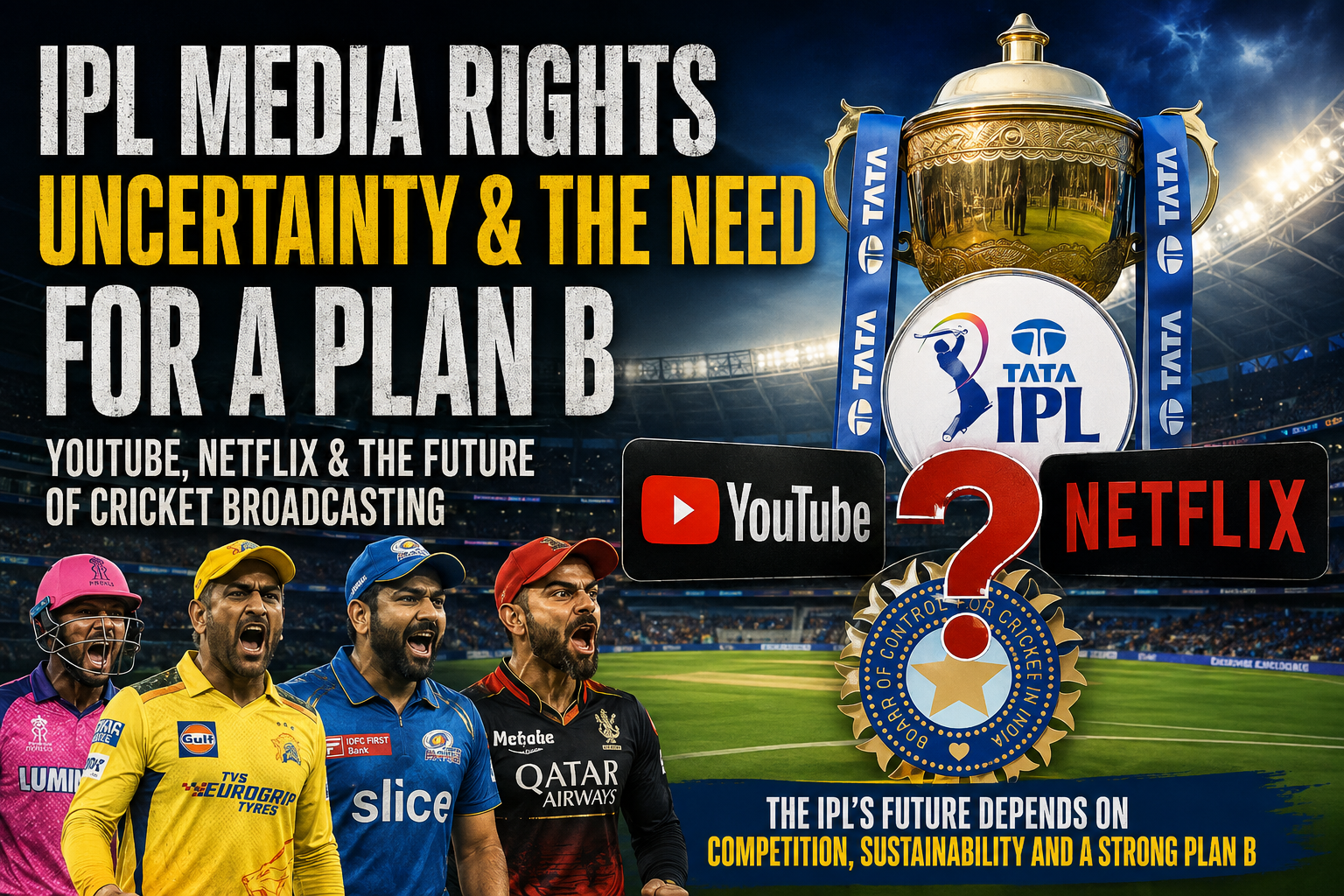
The Indian Premier League is cricket’s biggest property. It is India’s most prized prime-time asset. But a cloud of uncertainty is hovering over its media rights. With about six months to go before the final IPL edition of the 2023-27 rights cycle begins, there is growing concern among cricket’s biggest stakeholders. The absence of a credible bidder other than JioStar is preventing an accurate assessment of the property’s value. This is denying the market the competitive tension that has driven IPL rights upwards for a decade.
The Changing Landscape of IPL Broadcasting
Ten years ago, the IPL rights market looked very different. You would have multiple serious media companies competing for major sports rights. Four or more companies would genuinely fight for properties. That is no longer the case. Today, JioStar appears to be the only serious player standing. And that is not a healthy sign for Indian cricket.
The BCCI’s reluctance to seek better price discovery ahead of the upcoming IPL and home bilateral media rights tender is weighing heavily on the industry. The fundamental issue is that the cost of rights has risen dramatically. But the ability to monetise those rights has not risen at the same rate. This is creating an unsustainable ecosystem.
What Uday Shankar Said
Uday Shankar, the media entrepreneur who serves as vice-chairman of JioStar, recently spoke at the ET World Leaders Forum. His comments were revealing. He said that ten years ago, you would have multiple and serious media companies competing for major sports rights. Today, it feels like JioStar is the only one standing. And that is not healthy.
He added that the fundamental issue is the cost of rights versus the ability to monetise them. The value of sports is enormous, but the rights holder, broadcaster, and platform all need to participate in a sustainable ecosystem. His words echo a growing concern in the industry.
Learn about : Finding the Best Cricket Betting App in India
Could YouTube and Netflix Enter the Fray?
The worrying part of this narrative is the absence of a Plan B for Indian cricket. That JioStar will bid healthily for the IPL is a given. Its subscription numbers are heavily leveraged against cricket consumption. What is baffling is the BCCI’s inability to bring more participants to the table.
Players such as YouTube and Netflix have been engaging aggressively with sport in the West. YouTube’s move into rights aggregation and bundling has become an industry trend. YouTube increasingly treats sport as the anchor of a broader pay-TV and subscription ecosystem. Its seven-year deal for exclusive US distribution of NFL Sunday Ticket is worth a reported $2 billion per season. That is serious money.
Netflix co-CEO Ted Sarandos recently told The Economic Times that the streaming giant was interested in live sport, including cricket. But he added that Netflix had no intention of becoming a conventional full-season sports broadcaster. If so, a property like the IPL sits squarely in Netflix’s territory. The storytelling potential of an India-first sports property speaks to a billion-plus domestic audience. It reaches a vast global diaspora. It is one of India’s most effective exports.
The BCCI’s Plan B Problem
The BCCI finds itself in a difficult position. It has a valuable product. But it is not marketing it effectively to global players. Media players in different time zones may not be fully clued in to the India story. They need to hear it first-hand from the people writing it. Assuming otherwise is optimistic at best.
Uday Shankar put it simply. At some point, the economics have to make sense. For that to happen, the responsibility must lie with the federation itself to market what is, by any measure, a high-value product.
What This Means for Cricket Bettors
The IPL rights landscape has implications beyond broadcasting. The value of the IPL directly affects the betting ecosystem. Competitive bidding drives up the value of the property. That, in turn, influences the visibility and reach of the tournament. A less competitive media environment could impact how the IPL is presented to viewers. This could affect everything from viewership numbers to the depth of the betting markets.
Bettors should pay attention to these developments. The financial health of the IPL affects the tournament’s stability. A sustainable broadcasting model ensures the tournament continues to grow. And that growth translates into more betting opportunities for fans.
Also Check : England Pakistan Test Prediction 2026: 2nd Test at Lord’s Preview, Tips and Match Forecast
Final Thoughts
The IPL is India’s most prized prime-time asset. But it needs a Plan B. The BCCI must work harder to bring more participants to the table. YouTube and Netflix are potential entrants. Their interest in live sport is growing. But they need to be convinced that the economics make sense.
The responsibility lies with the BCCI to market the IPL as a high-value product. If it does not, the absence of competitive tension could harm the ecosystem. And that would be a loss for everyone – fans, broadcasters, and bettors alike.
Read more : ipl-betting.co

